
what does ESG mean?
“What is the use of a house if you haven’t got a tolerable planet to put it on?”
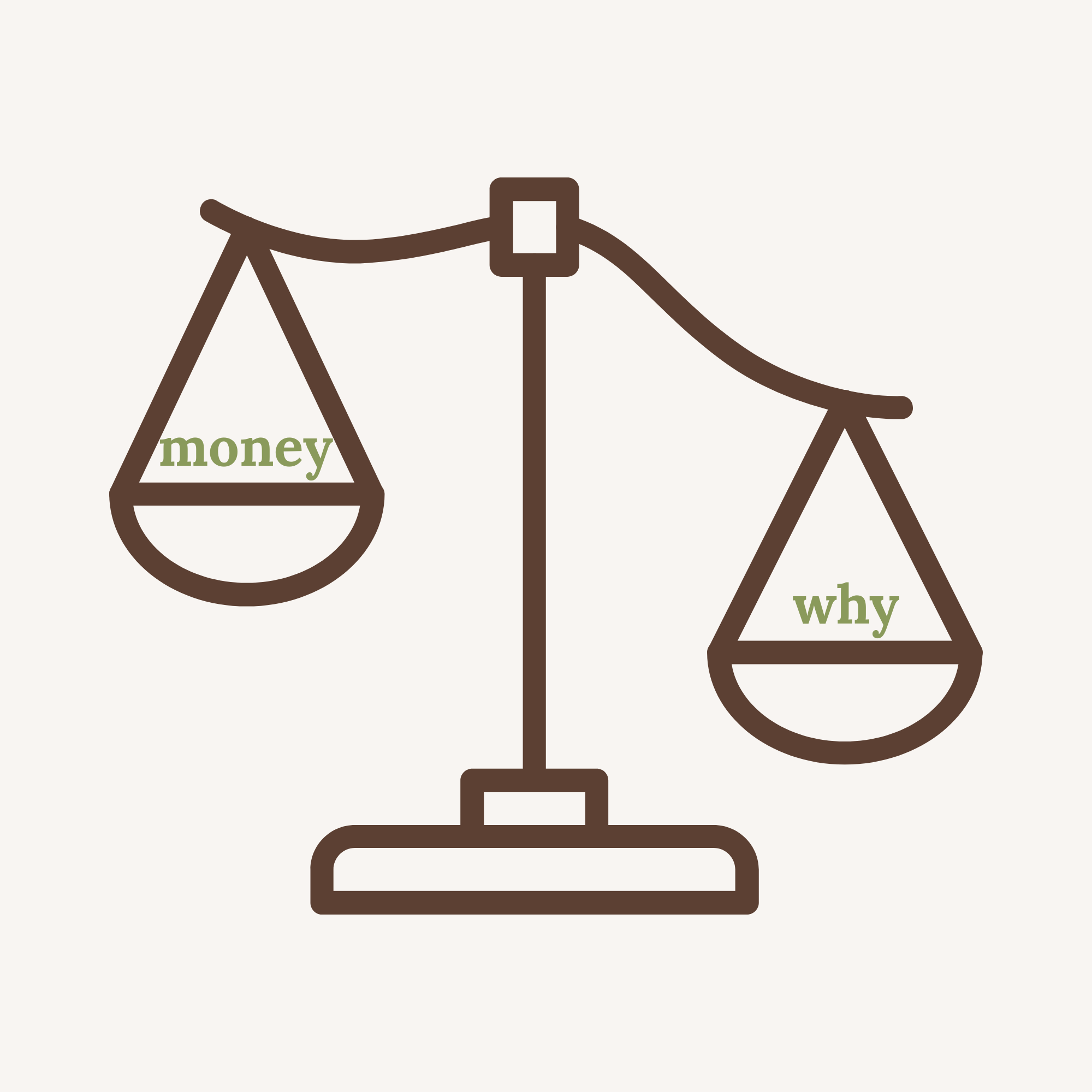
Your why outweighs your money.
Alignment is futile in the absence of balance between money and reason. Isolated from reason—your why—money will grow out of sync and hold less weight. Why you contribute to things has always held more value than what you contribute to.
Where does the label, ESG, come from?
ESG stands for environmental, social, and governance—a framework, coined in a 2004 UN report, for evaluating how companies manage these three areas.
In the noon of 2000, United Nations Secretary-General Kofi Annan wrote to CEOs of companies worldwide inviting them to join the Global Compact initiative. This initiative sought to encourage corporations to remedy the challenges stemming from globalization: economic inequality, environmental degradation, and labor exploitation. It’s vision: a more stable and inclusive global economy.
To achieve this, the Global Compact manifested ten core principles sustaining human rights, labor, environment, and anti-corruption. The ten principles are as follows:
Human rights:
Principle 1: Businesses should support and respect the protection of internationally proclaimed human rights within their sphere of influence
Principle 2: Make sure they are not complicit in human rights abuses
Labor:
Principle 3: Businesses should uphold the freedom of association and the effective recognition of the right to collective bargaining
Principle 4: The elimination of all forms of forced and compulsory labor
Principle 5: The effective abolition of child labor
Principle 6: Eliminate discrimination in respect of employment and occupation
Environment:
Principle 7: Businesses should support a precautionary approach to environmental challenges
Principle 8: Undertake initiatives to promote greater environmental responsibility
Principle 9: Encourage the development and diffusion of environmentally friendly technologies
Anti-Corruption:
Principle 10: Businesses should work against corruption in all its forms, including extortion and bribery
These guiding principles eventually established a positive link between what corporations do for society, how well corporations perform over time, and investor decision making.
the jist
In 2000, United Nations Secretary-General Kofi Annan wrote to CEOs across the globe inviting them to join the Global Compact initiative. Findings from this initiative helped uncover a relationship between how corporations uphold principles supporting human rights, labor, environment, and anti-corruption and positive corporate performance.
In 2004, these findings were the backbone of the UN-published report, Who Cares Wins: Connecting Financial Markets to a Changing World. This report coined the term ESG as it provided guidance on how companies can integrate Environmental, Social, and Governance considerations throughout their operations.
In the pursuit of a more stable and inclusive global economy, the UN also included guidance on how developed and emerging markets will differ in how they consider ESG integrations. Emerging markets will consider socio-economic, governmental, and regulatory groundwork—among other issues—to aid sustainable growth. Meanwhile, developed markets will focus more specifically on post-foundational phase issues.
What does ESG stand for?
The U.N. Global Compact unearthed an undiscovered skeleton of how capitalism could work—a company does better when it does better. From Global Compact initiative findings, the United Nations released a report in late 2004 to provide guidance on ways to improve the consideration of certain issues in investment decisions. Particularly, environmental, social, and governance issues. The report was titled “Who Cares Wins: Connecting Financial Markets to a Changing World,” and it coined the term ESG.
Semantics have birthed great chatter among supporters and opponents over what’s baked into these words, and intention is often an ingredient corporations will exploit. The United Nations foresaw this human byproduct and shared a selection of ESG issues impacting company and investment value in their nascent report. They are as follows:
Environmental issues: impact on Earth
Climate change and related risks
The need to reduce toxic releases and waste
New regulation expanding the boundaries of environmental liability with regard to products and services
Increasing pressure by civil society to improve performance, transparency and accountability, leading to reputational risks if not managed properly
Emerging markets for environmental services and environment-friendly products
Social issues: impact on society
Workplace health and safety
Community relations
Human rights issues at company and suppliers’/contractors’ premises
Government and community relations in the context of operations in developing countries
Increasing pressure by civil society to improve performance, transparency and accountability, leading to reputational risks if not managed properly
Corporate governance issues: impact on corporations
Board structure and accountability
Accounting and disclosure practices
Audit committee structure and independence of auditors
Executive compensation
Management of corruption and bribery issues
How do we measure ESG issues globally?
A central theme living within ESG investing is a reestablishment of how certain issues are considered and measured, and how that will differ between developed and emerging markets. Companies realized there are risks—reputational and financial—if contributing to economic inequality, environmental degradation, and labor exploitation across the globe. In the 2004 Who Cares Wins UN report, examples of how ESG issues can be considered and how they differed between developed and emerging markets were provided. For a global pursuit of stability and inclusivity, emerging markets will focus more on the foundational ESG considerations as they continue growing.
Oil and gas
Developed market considerations: oil spills and CO2 emissions
Emerging market considerations: Socio-economic impacts, government relations, and revenue sharing
Food industry
Developed market considerations: Food safety, brand, and reputation risk
Emerging market considerations: “Functional food” reputation and nutritional value, especially in low-income diets
Pharmaceuticals
Developed market considerations: Bio-safety and animal welfare
Emerging market considerations: Role of national healthcare systems, patent rights, environmental effects of compounds
Automotive
Developed market considerations: Safety requirements and CO2 emissions
Emerging market considerations: Mobility, socio-economic impacts, and low emission regulations
The mission of ESG investing:
To shape a more stable and inclusive global economy.
Disclosures:
Just Advising LLC is a Registered Investment Adviser in the state of North Carolina. Advisory services are only offered to clients or prospective clients where Just Advising LLC and its representatives are properly registered or exempt from registration. Justin Horowitz is an investment adviser representative of Just Advising LLC. The firm is a registered investment adviser and only conducts business in jurisdictions where it is properly registered, or is excluded or exempted from registration requirements. Registration as an investment adviser is not an endorsement of the firm by securities regulators and does not mean the adviser has achieved a specific level of skill or ability.
Content is for educational purposes only and does not constitute a solicitation or offer to buy/sell any securities or provide personalized investment advice. Past performance is no guarantee of future results. All investments involve risk, including the loss of principal. “Likes” should not be considered a positive reflection of the investment advisory services offered by Just Advising LLC. "Likes," "Shares," or "Comments" are not endorsements of any individual or service. Just Advising LLC is not responsible for the content or accuracy of third-party websites linked herein. Comments are monitored but should not be considered testimonials.
The information presented on this post is believed to be factual and up-to-date, but we do not guarantee its accuracy and it should not be regarded as a complete analysis of the subjects discussed. Comments should not be construed as an offer to buy or sell, or a solicitation of an offer to buy or sell the investments mentioned. A professional adviser should be consulted before implementing any of the strategies discussed. Investments involve varying degrees of risk, and there can be no assurance that any specific investment or strategy will be suitable or profitable for a client's portfolio. All investment strategies can result in profit or loss.
Environmental, Social, and Governance (ESG) investing is qualitative and subjective by nature. There is no guarantee that the criteria used or the investments selected will reflect the beliefs or values of any particular investor. ESG strategies may limit the types and number of investment opportunities available, which could cause a portfolio to underperform the broader market or other strategies that do not utilize ESG criteria. Past performance of ESG-related investments is not an indicator of future results, and there is no assurance that an ESG-oriented approach will result in better performance or lower risk.
